3-Day Morocco Desert Tour at a Glance
A 3 day Morocco desert tour from Marrakech to Merzouga is the classic way to see the country's most dramatic landscapes in a single trip: the High Atlas Mountains, historic kasbahs, the palm-lined valleys of the south, and the towering dunes of the Sahara Desert. It's a loop that covers a lot of ground — roughly 1,300 km round trip — but it's built to feel unhurried, with the driving broken up by real stops rather than rushed photo breaks.
This guide walks through exactly what a well-run Marrakech to Merzouga desert tour looks like day by day, what's typically included, and what to know before you book, whether you're planning it yourself or looking at a private departure with a company like Morocco Desert Nights. It's worth saying upfront: three days is enough to genuinely experience the Sahara Desert, but it is a fairly full itinerary. If your schedule allows a fourth day, it takes real pressure off the driving without changing the core route.
Day 1: Marrakech → Ait Ben Haddou → Ouarzazate → Dades Valley
The first day leaves the red walls of Marrakech behind and climbs into the High Atlas Mountains via the Tizi n'Tichka pass, one of the highest paved mountain roads in North Africa at over 2,200 meters. The switchbacks alone make for a memorable few hours, with Berber villages clinging to the hillsides, roadside walnut and almond sellers, and, depending on the season, snow-capped peaks in the distance.
Ait Ben Haddou
The first real stop is Ait Ben Haddou, a UNESCO World Heritage ksar (fortified village) of red clay buildings that has featured in numerous films and television productions. Most tours allow an hour or two here to walk through the narrow passages and climb to the top for a view over the Ounila Valley — a good introduction to the earthen architecture you'll keep seeing for the rest of the trip.
Ouarzazate and the Road South
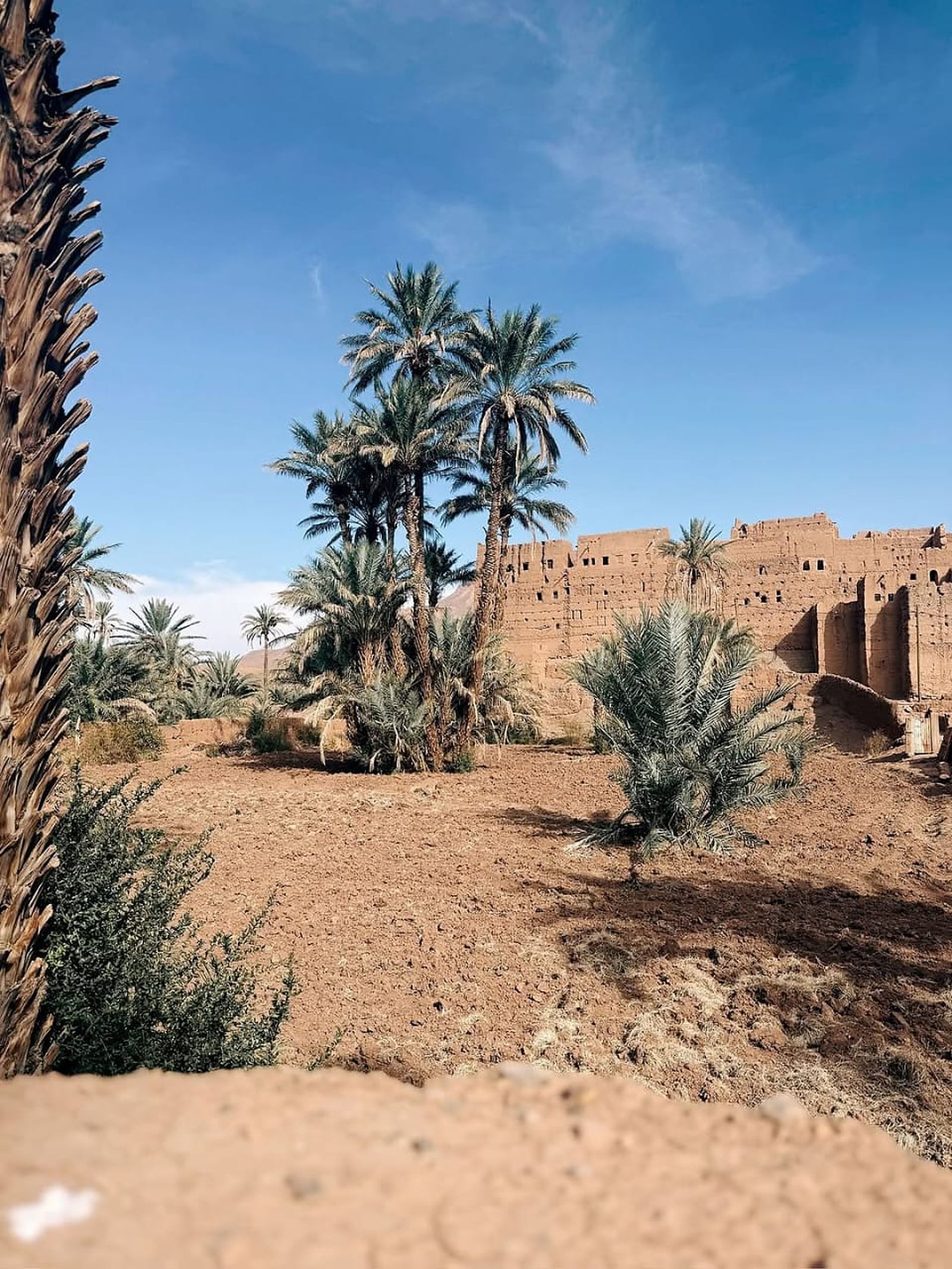
From Ait Ben Haddou it's a short drive to Ouarzazate, known locally as the gateway to the desert and home to Morocco's film studios. After a stop for lunch, the route continues east along the "Road of a Thousand Kasbahs," passing through Skoura's palm groves before reaching the Dades Valley in the late afternoon.
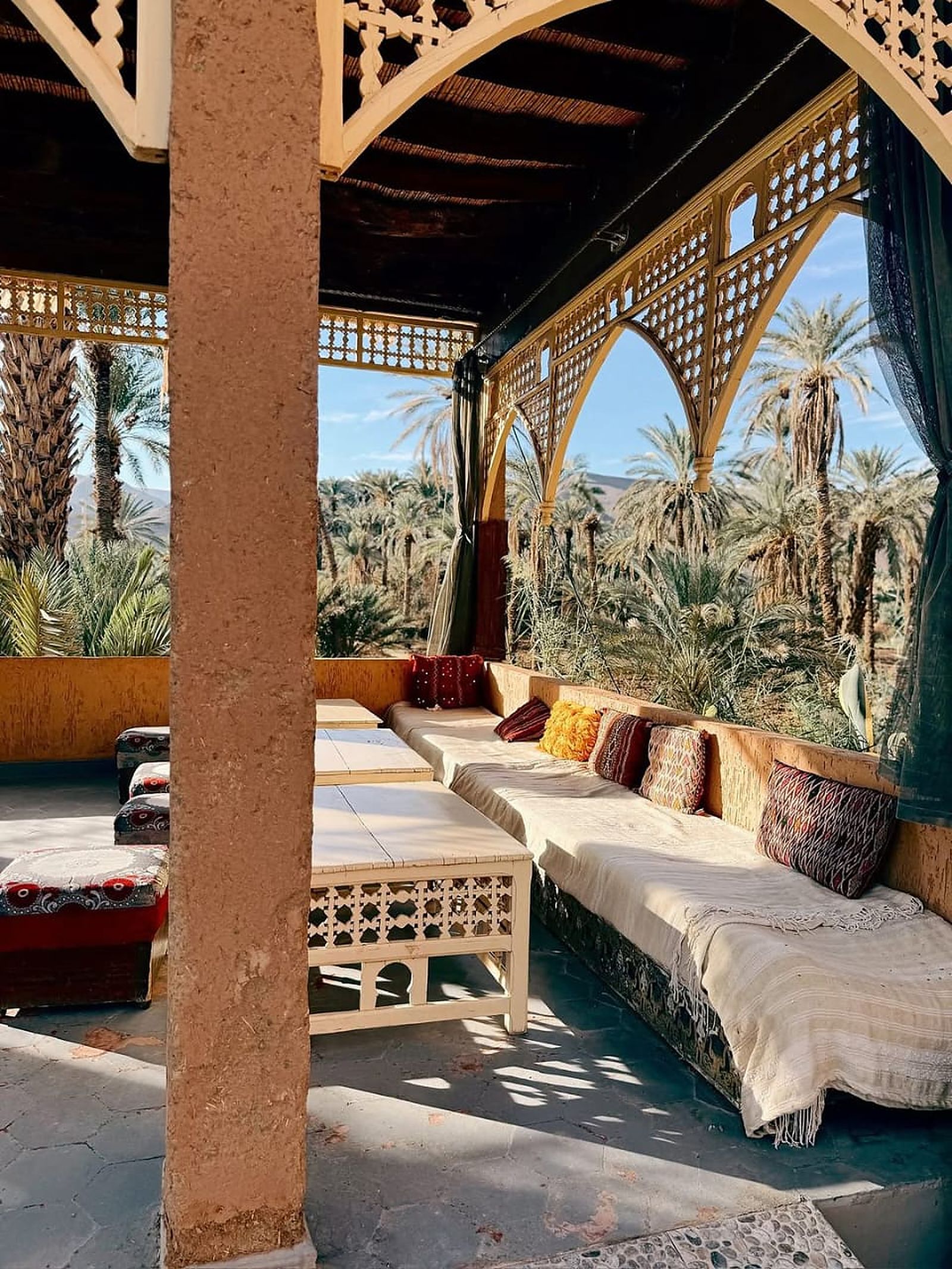
Most private tours overnight in a kasbah-style guesthouse in the Dades Valley, which makes a comfortable, scenic base after a full day of driving and sightseeing. It's a good spot to slow down for an evening — many of these guesthouses have terraces or lounges that look straight out over the palm groves.
Day 2: Dades Valley → Todra Gorge → Merzouga → Camel Trek → Sahara Desert Camp
The second day is the one most travelers are waiting for — it ends with a camel trek into the Sahara. Before that, though, there's more spectacular scenery to cover.
Todra Gorge
The morning usually starts with a detour into Todra Gorge, where sheer rock walls rise up to 300 meters on either side of a narrow river-cut canyon. It's a popular spot for a short walk and photos, and a striking contrast to the desert landscape still to come.
Crossing to Merzouga
From Todra Gorge, the road heads toward Erg Chebbi and the town of Merzouga, with the scenery gradually shifting from valley and gorge to flat hamada (rocky desert) and, finally, the first real dunes. This stretch usually includes a lunch stop and, depending on the operator, a visit to a local Berber family or a look at the old khettara irrigation channels that have watered this region for centuries.
Camel Trek and the Sahara Desert Camp
Late afternoon is when the trip changes pace entirely. Vehicles are swapped for camels at the edge of Erg Chebbi, and a guided camel trek carries the group into the dunes as the light turns gold, timed to arrive at camp around sunset. For travelers who'd rather skip the ride in, most operators can also transfer guests by 4x4 instead.
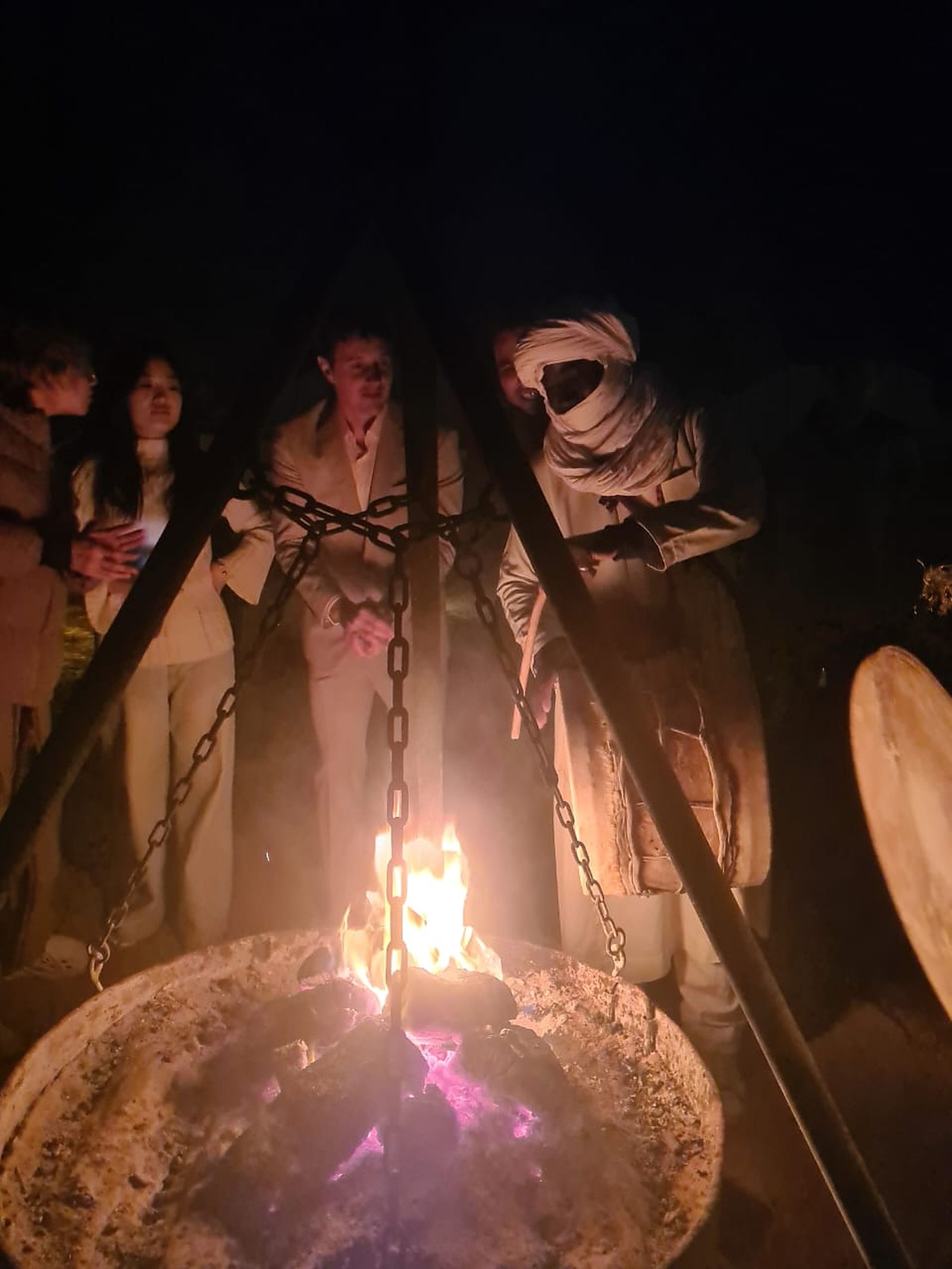
The night is spent at a desert camp among the dunes — traditional tents, a shared dinner, music around the fire, and, on a clear night, some of the darkest skies and best stargazing in Morocco. Morocco Desert Nights runs both traditional Berber-style camps and more private, luxury desert camps with en-suite tents for travelers who want a bit more comfort without losing the atmosphere.
Optional: Quad Biking and Sandboarding
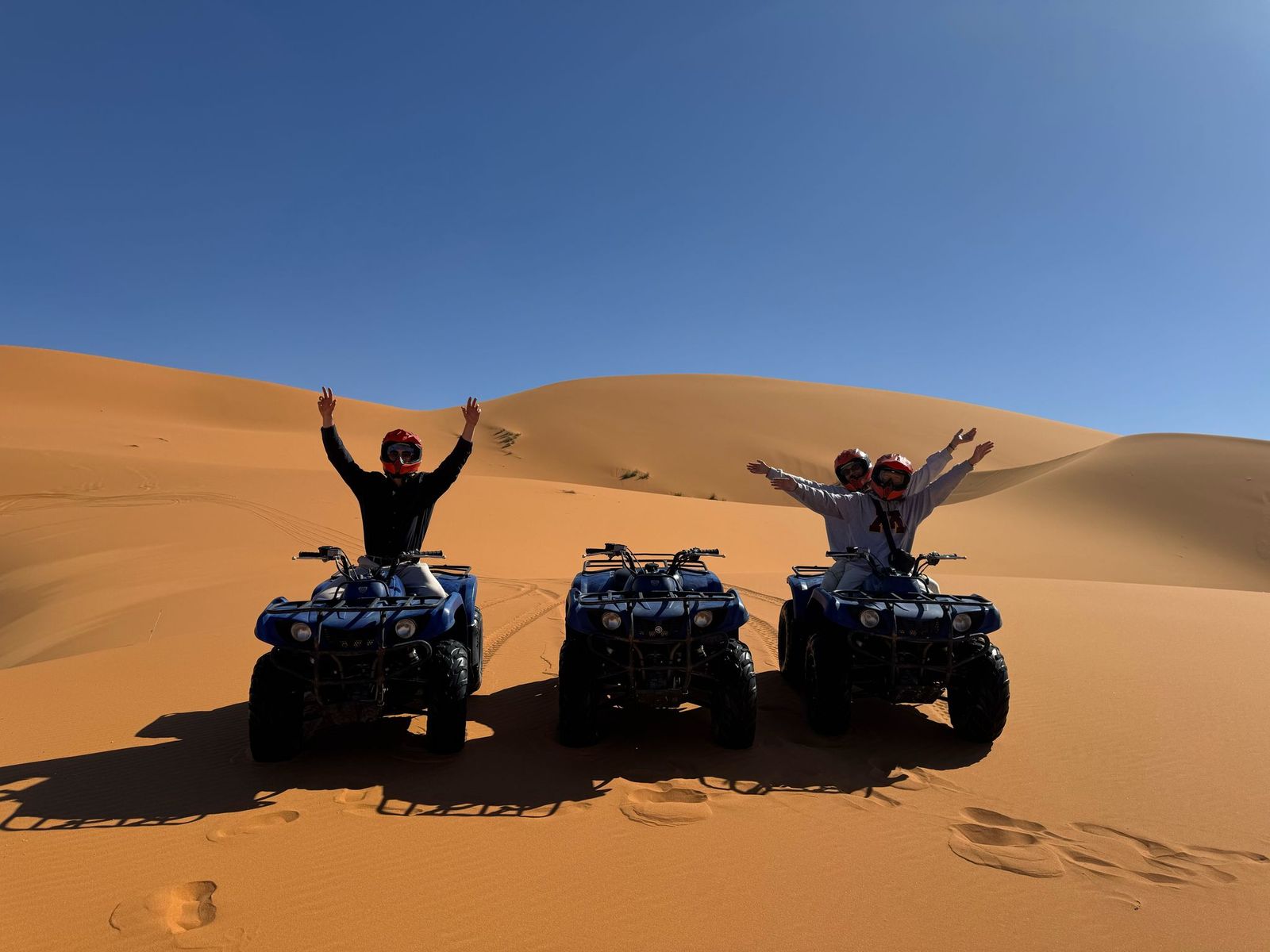
Many travelers extend their time in Merzouga with an optional activity before or after the camel trek. Quad biking across the dunes is one of the most popular add-ons — it's a fast, fun way to cover more of Erg Chebbi than a camel trek allows, and pairs well with sunset or sunrise timing for the best light and cooler temperatures. Sandboarding on the steeper dune faces near camp is another common option.
Day 3: Merzouga Back to Marrakech
The final day usually starts early, with a sunrise camel trek or 4x4 transfer back out of the dunes, followed by breakfast and a shower at a guesthouse in Merzouga before the long drive west.
Rather than retracing the exact route, many itineraries head back via the Draa Valley — Morocco's longest river valley and one of its most fertile, lined with palm groves and old fortified villages — before rejoining the road at Ouarzazate and crossing the Tizi n'Tichka pass a second time back into Marrakech, usually arriving in the evening.
Because it's a long final day of driving, it's worth confirming with your operator whether the pace allows for a proper lunch stop and a break or two along the way, rather than a straight run back to the city.
What's Included and What's Not
Inclusions vary between operators, so it's always worth confirming details before booking, but a typical 3-day Marrakech to Merzouga desert tour includes:
| Usually Included | Usually Not Included |
|---|---|
| Private transport in an air-conditioned 4x4 or minivan | International flights |
| English-speaking driver-guide for the full route | Travel insurance |
| Camel trek into Erg Chebbi with a local guide | Lunches along the route (unless specified) |
| One night in a desert camp (dinner and breakfast included) | Optional activities like quad biking or sandboarding |
| One night in a Dades Valley guesthouse or kasbah (room only, or with breakfast) | Entrance fees at Ait Ben Haddou or Todra Gorge (usually small, paid on site) |
| All fuel, tolls, and driving costs | Tips for the driver-guide and camp staff |
If you're comparing quotes between operators, it's worth checking specifically whether the Dades Valley accommodation is included or optional, and whether the camel trek and camp night are private to your group or shared with other travelers — this affects both the price and the overall feel of the trip.
Best Time for This Tour
This route can be done year-round, but the most comfortable months are October through April, when daytime temperatures across the route are pleasant and desert nights are cool but manageable with proper layers. December and January bring the coldest nights of the year in the Sahara, so pack accordingly if you're traveling then.
May through September is hot, especially in the desert sections, with midday temperatures that make outdoor activity uncomfortable. The tour still runs in summer — camel treks and camp arrivals are simply timed around sunrise and sunset to avoid the harshest hours. For more detail on seasonal planning, see our guide to the best time to visit the Sahara Desert.
What to Pack
- Layers: warm clothing for desert nights (especially November–February), and breathable layers for daytime driving and walking.
- Comfortable, closed shoes: for Ait Ben Haddou, Todra Gorge, and walking around camp.
- Sun protection: hat or scarf, sunglasses, and sunscreen — the sun is strong throughout the route, not just in the desert.
- A small overnight bag: most operators ask you to pack light for the camel trek and camp night, leaving larger luggage in the vehicle.
- Cash: for tips, drinks, and souvenirs along the route, since card payment is unreliable outside the main cities.
- Power bank and headlamp: useful at the desert camp, where charging and lighting can be limited.
For a longer breakdown, see our full Sahara packing guide.
Tips for a Smooth Trip
Book a Private Tour If You Can
Shared group tours are usually cheaper, but a private Morocco desert tour gives you control over pacing, stops, and departure times — useful if you want longer at Ait Ben Haddou, an extra photo stop in the Dades Valley, or simply don't want to share a vehicle with strangers for three days.
Confirm Your Camp Style in Advance
If a private, more comfortable camp night matters to you, ask specifically about camp type when booking rather than assuming — the difference between a large shared camp and a small private one is significant.
Break Up the Long Driving Days
This is a big loop covered in three days, which means real time in the vehicle. A good operator builds in enough stops that the driving feels like part of the trip rather than something to get through.
Ask Questions Before You Book
A reliable operator should be able to tell you clearly what's included, roughly how many hours of driving each day involves, and what the desert camp actually looks like — if those answers are vague, it's worth looking elsewhere.
Expect Limited Connectivity
Mobile signal is patchy through parts of the High Atlas and largely absent at the desert camp itself. It's worth telling family or your accommodation ahead of time that you'll be offline for a stretch, and downloading anything you need (maps, music, entertainment) before you leave Marrakech.
Ready to Experience This Yourself?
Message us on WhatsApp with your travel dates and we'll help you plan the right trip.
Chat on WhatsAppFrequently Asked Questions
How long is the drive from Marrakech to Merzouga? +
Is this tour suitable for children or older travelers? +
Can the 3-day itinerary be extended or customized? +
Is the camel trek included, or is it an optional extra? +
Related Tours