
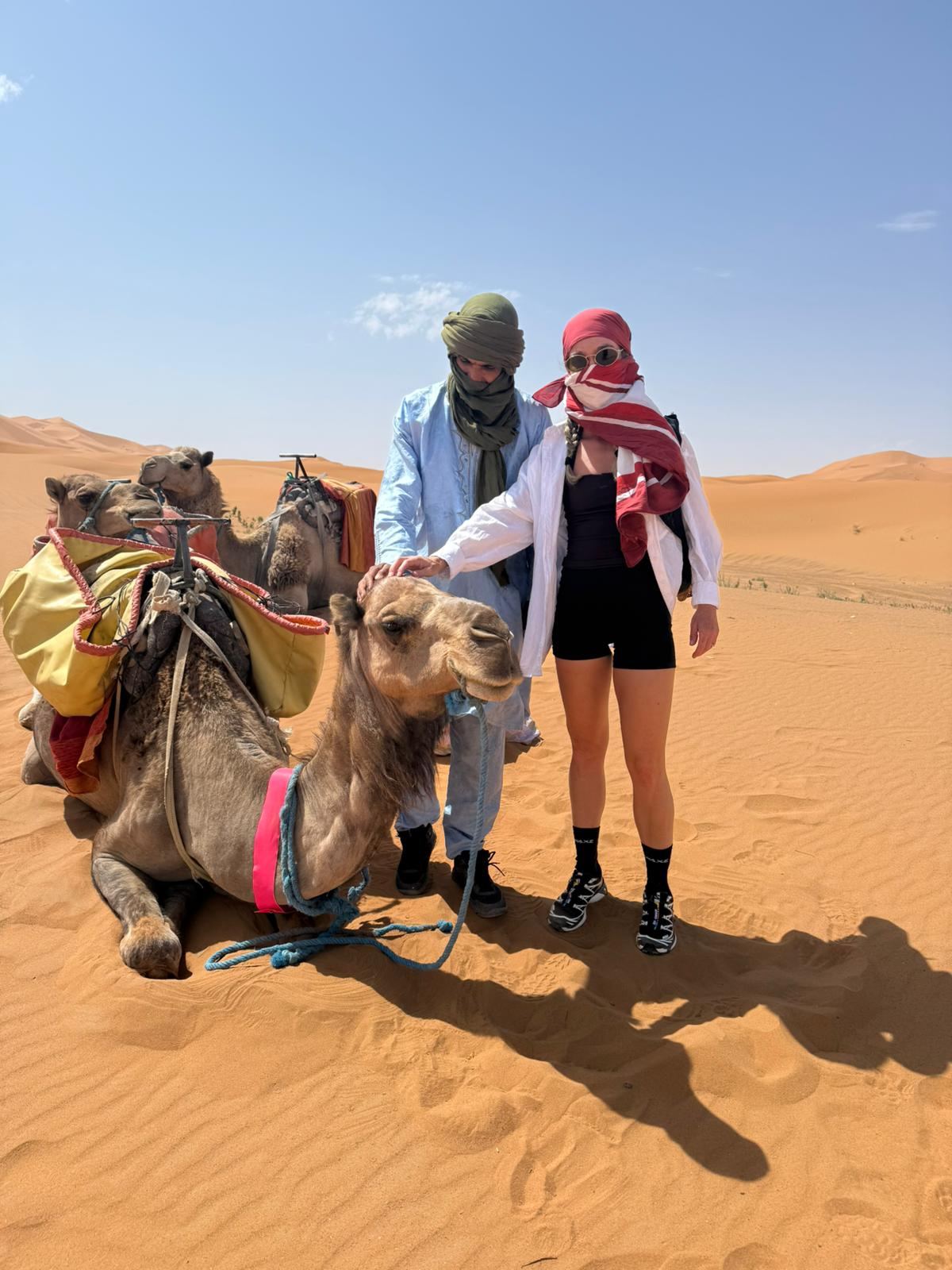
What to Expect on Your First Trek
Camel trekking in Merzouga is far gentler than most first-timers expect. The camels used for tourist treks are calm, familiar with visitors, and led on foot by a local guide the entire way — you never need to steer or control the animal yourself. You'll mount while the camel is kneeling in the sand, hold the front handle of the saddle as it stands (there's a noticeable forward-then-back lurch), and then settle into a slow, rolling walk that most people find surprisingly relaxing within a few minutes.
A typical sunset trek from the edge of Erg Chebbi to a desert camp takes around an hour, moving in a line of three to six camels roped together, with your guide walking alongside. There's no rush: the pace is set to let you actually look around at the dunes rising on either side, which by late afternoon have turned a deep orange-red.
Sunset Trek vs. Sunrise Trek
Most travelers experience both, since an overnight desert camp stay naturally includes a trek in and a trek out. The sunset ride is the more photogenic of the two, with warm light and long shadows across the dune ridges as you approach camp. The sunrise trek back the next morning is quieter and cooler, with the sand still holding the night's chill and the whole desert nearly silent apart from camel bells and footsteps.
If you only have time for one, we'd lean toward sunset for the arrival experience, but honestly the sunrise ride surprises a lot of guests as their favorite part of the whole trip — it's harder to describe, but there's a stillness to it that photos don't quite capture.
What to Wear
Loose, breathable trousers are more comfortable in the saddle than shorts, and closed shoes help once you're walking around camp in soft sand. A scarf or headwrap is genuinely useful, not just for photos — wind can pick up fine sand in the late afternoon, and it also helps with sun protection on exposed skin. Layering matters too: desert afternoons are warm, but temperatures drop quickly after sunset, especially between November and February.
How the Camels Are Cared For
Our camels work in short, well-spaced shifts and are given regular water and rest. Saddles are padded and checked before each trek, and handlers — many of whom have raised these animals since they were young — watch closely for any sign of discomfort. Routes and trek lengths are chosen with the animal's condition in mind, not just the schedule.
Five Tips for a Better Ride
- Keep loose items (sunglasses, phones) secured; the mount and dismount motion is the bumpiest part of the ride.
- Bring a small headlamp or phone flashlight for the walk around camp after dark.
- Ask your guide to point out landmarks or dune names — most are happy to share desert knowledge if you're curious.
- Sit back slightly during the standing/kneeling motions rather than gripping forward.
- If you have knee or hip discomfort, mention it beforehand so your guide can suggest a shorter trek option.
Ready to Experience This Yourself?
Message us on WhatsApp with your travel dates and we'll help you plan the right trip.
Chat on WhatsAppFrequently Asked Questions
Is camel trekking safe for first-time riders? +
How long does a typical camel trek last? +
What if I'm afraid of heights or animals? +
Related Tours